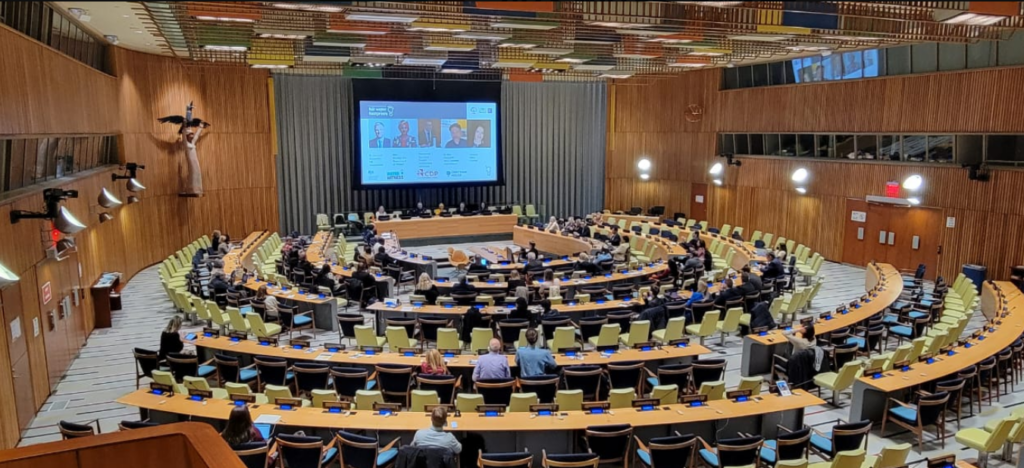
With water now a systemic economic and trade resilience risk, at a recent Fair Water Footprints event, government, trade, finance, youth and civil society participants dived deep into the challenges this situation presents and discussed possible responses.
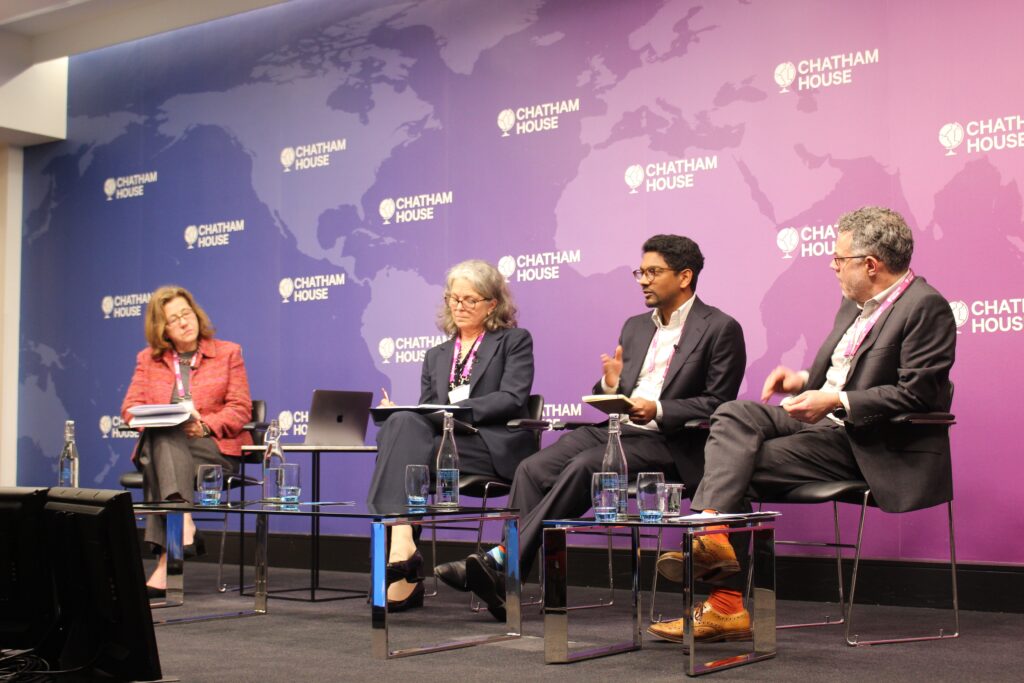
Trade is taking place in an increasingly difficult context. Long-established rules and conventions are under threat, while environmental breakdown and socio-political unrest threaten critical supply chains. Water is at the heart of those supply chains: used in production and vital for workers and their communities but with the extent of its significance often hidden from view.
At the Fair Water Footprints conference held at Chatham House, Yuvan Beejadhur, senior advisor to the director-general of the World Trade Organisation, was the first to say how important it is to manage water collectively and turn the tide on water stress in trade, to improve supply chain reliability and production continuity.
Sareen Malik, executive secretary of the African Civil Society Network for Water and Sanitation, pointed out the significance of the African Water Vision policy and its critical contribution to the African Union’s Agenda 2063.
“92% of Africa’s exports worth US$432bn annually are critically dependent on water.” — Sareen Malik
The risks of inaction are accelerating, she said, and could end in a major shock if nothing is done. Henk Ovink, executive director and founding commissioner of the Global Commission on the Economics of Water, added that it would be a grave mistake if water was to be treated as a technical issue in the same way as energy and left to a few specialists to sort out.
Water cycles link every citizen and economy across the world, he said, and understanding that supercharges cooperation.
“Water is the gem to drive energy sustainability, food security and health.
Water is an infinite asset for the world; land, biodiversity, climate and water
are all interlinked.” — Henk Ovink
Calling for transparency and collaboration
So, what was the response from the trade sector?
There was a call for transparency from Lee Ann Jackson from the Forum on Trade, Environment and the SDGs (TESS) — transparency in data and how water use is measured in different parts of the supply chain.
She too called for collaboration across all trade actors: country-to-country, and between governments and the private sector on private sector supply chain issues and how companies communicate across the supply chain. She encouraged civil society to come together to advocate for this.
She was also clear that it must be the whole policy landscape that is interrogated and not just single policies. Many subsidies, for example, result in over-extraction of water and could be repurposed. Bilateral trade agreements could promote more positive policies in return for improved market access.
“US$320bn harmful water and sanitation subsidies and US$600bn agricultural subsidies – could be repurposed to support climate adaptation and better use of water.” — Lee Ann Jackson
Chantal Line Carpentier, head of trade, environment, climate change and sustainable development at UNCTAD, made the point that sustainable trade will only be achieved if water is managed at source and not only further down the supply chain. This requires global cooperation and ensuring that the right people are consulted — local people as much as factory managers.
Kaushik Janakiraman, director of policy, advocacy and risk at Reckitt, agreed, stating that the entire value chain should be looked at so that communities are supported to have access to capital to provide sustainable water, sanitation and hygiene facilities (WASH).
Nick Hepworth of Water Witness International provided a shocking example of workers in Cote d’Ivoire’s cocoa sector having poor access to WASH, resulting in open defecation and people, with no access to clean water, forced to take water for drinking out of ditches.
Cocoa is not the only commodity where there are issues; fashion, fruit and vegetable supply chains are all known for pollution and unsustainable water use.
Hepworth stressed that he wasn’t calling for less trade. He was calling for businesses to work towards having a fair water footprint: achieving zero pollution, using and allocating water sustainably and equitably, ensuring all workers have safe water, sanitation and hygiene, protecting and restoring nature and building resilience to droughts and floods.
Businesses, brands and suppliers need to take water risks seriously, he said, because where water is used sustainably, it can be a driver of economic development.
Finance and investors need to act; trade agreements should have clauses to comply with local laws on water sustainability, but it isn’t happening.
Leaders and diplomats must push water up the political agenda and multilateral organisations should think about a new convention on water security.
“The best way to predict the future is to create it, so let’s create together a fairer and more sustainable water future.” — Nick Hepworth
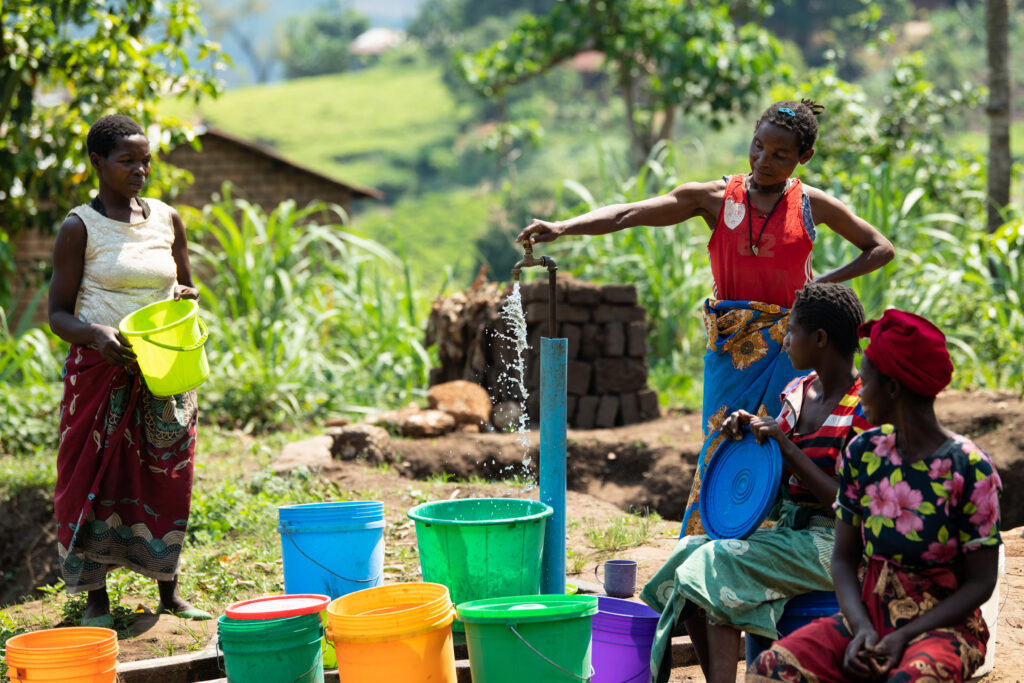
Weak water resilience will have impacts everywhere
Carpentier also called for more sharing of stories of where positive action is being taken, and in the next session special envoy for water, Antii Rautavaara, talked about what the Finnish government is doing. There is a national water strategy, as well as a strong acknowledgement that consumption and production in Finland relies heavily on ‘imported’ water — water contained in imported goods produced elsewhere, using water from other countries.
Rautavaara saw the UN Water Conference coming up at the end of 2026 as a critical moment for coming together to build international ambition on water and human rights, and to increase corporate finance and value chain responsibilities.
Morocco would welcome greater water accountability. Ninety-eight per cent of its water footprint is embedded in agricultural exports. This in a country highly vulnerable to climate change and where, in the seventh year of drought, 1 million hectares of land is irrigated.
Younes Laabdi, head of the water management service in the Ministry of Equipment and Water in Morocco, pointed out the dilemma: water use on the one hand generating foreign currency, trade and social stability; on the other, causing issues when large amounts of that water are sourced from a hydrologically stressed basin.
Action is essential. Water is moved around from the north to the south of the country, 156 large dams and the largest desalination plant in Africa are being built to reduce the pressure on groundwater, there will be new laws to stop overexploitation of groundwater, as well as investment in water pricing to give farmers incentives to adopt water-saving technology.
At the same time, Morocco’s role as a major supplier of fresh produce — the UK sources roughly a quarter of all its tomatoes from the country — means that water stress, like that experienced in its farming regions, also poses a direct risk to the food security and economic resilience of importing nations. Ensuring sustainable water use is therefore not only vital for Morocco’s stability, but also for maintaining reliable supply chains that underpin national resilience elsewhere.
Yet again, Laabdi called for cooperation across the whole supply chain to ensure the best possible water stewardship and resilience.
Incentivising finance and investment sectors to support water resilience
So what will incentivise the finance and investment sectors to play a part in building water resilience and stronger stewardship? For Luke Sussams, head of sustainability and transition strategy, Europe, the Middle East and Africa, at investment bank, Jefferies, it would be balance sheet risks that would lead to change — provided those risks had been properly assessed. And as Ella Lazarte, CEO of Resilient Water Accelerator, pointed out, that can’t be taken for granted, considering context is critical and data is not always available.
For Lylah Davies, an OECD policy analyst, the impact of underestimated water risks on a country’s GDP could be significant. Pakistan floods in 2022, for example, affected 2.2% of its GDP.
Financial institutions are interested in the risks and opportunities of water use in supply chains but need to convince investors that return on investment may need to be over the long term. Credit rating agencies could possibly fine-tune how they assess risk and avoid reducing potential for investment in emerging markets. Ultimately, public/private sector blended finance or concessional finance may be required to encourage investment to make industries more sustainable.
Strategic investment in water stewardship and infrastructure can help stabilise operations, protect upstream supply chains, and ensure the continued functioning of water-dependent facilities and industries, safeguarding industrial competitiveness. In this context, water must be treated not as a peripheral environment and sustainability issue, but as a core business risk and dependency — one that is materially significant, politically salient, and central to economic security and resilience.
A fair, sustainable water future for people and the planet
Resilience as the foundation of change. Better data for assessing risk. Greater transparency and possibly blended finance to encourage strategic investment. Above all, stakeholders coming together to be accountable and responsible for sustainable water stewardship across a range of trade supply chains.
Fundamentally, everyone working to put the ‘fair’ back into water footprints, to create a sustainable water future for people and the environment everywhere.